《猴岛》背后的科学:格罗格酒真能这么快就把金属杯子溶解掉吗?
Patrizio Raffa
ENTEG Institute, Faculty of Science and Engineering, University of Groningen, Groningen, The Netherlands.
Email: p.raffa (at) rug (dot) nl
Since its release in 1990 by Lucasfilm Games, The Secret of Monkey Island has become a classic of point-and-click adventure games. Many players who grew up in the 1990s will be familiar with the adventures of the aspiring mighty pirate (or was it a flooring inspector?) Guybrush Threepwood. Among the many perils he encounters and the dangerous concoctions prepared by the Voodoo Lady, few substances rival grog for sheer menace. This beverage, beloved by pirates in all the Tri-Island area, is remarkable not only for its questionable ingredients but also for its ability to corrode metallic objects rapidly. It is first introduced to the player by the pirate leaders at the SCUMM bar on Mêlée Island. According to their description, grog is the most caustic, volatile substance known to man; it is a secret mixture containing one or more of the following: kerosene, propylene glycol, artificial sweeteners, sulfuric acid, rum, acetone, red dye No. 2, SCUMM, axle grease, battery acid, and/or pepperoni. The most interesting property of grog from a chemical perspective is not its composition, however, but its remarkable corrosivity. In fact, they also explain that it readily eats through metal, much to the dismay of the chef, who spends a fortune on mugs. The game itself is the primary source for the dialogue and puzzle described here (Lucasfilm Games, 1990).
During the game, to cleverly solve one of the puzzles, Guybrush collects grog in pewter mugs. The container progressively deteriorates, forcing the player to transfer the liquid repeatedly into fresh mugs while travelling from the SCUMM bar to the jail. The grog can then be poured onto the lock of a prison cell, destroying it and freeing the prisoner Otis, who will become a crew member for Guybrush’s trip to Monkey Island (or… will he?).
This raises an obvious question for the chemically inclined player: what would grog actually have to contain to behave this way? The present work addresses this question semi-quantitatively. Rather than starting from possible formulations, we treat the game’s observation as an inverse problem: we use the apparent rate of mug deterioration to estimate the proton supply required by a simplified corrosion model. The objective is not to propose an experimentally reproducible formulation of grog, an endeavour that would be both inadvisable and potentially disappointing to pirates, but to determine which chemical characteristics are necessary to reconcile its behaviour with known corrosion science.
BOUNDARY CONDITIONS AND ASSUMPTIONS
To formulate the model, we need estimates of the time required for grog to eat through the mug, as well as the mug’s wall thickness and material composition.
Time
Anyone who has played the game repeatedly, including the author, will have learned to time the mug-swapping manoeuvre carefully to reach the jail and pour the contents onto Otis’s cell lock. How frustrating! Although the game does not provide a physical clock, a mug’s lifetime can be measured “experimentally” by having Guybrush fill it, waiting until it dissolves completely, and recording the elapsed time.
The author timed the puzzle near the end of Act 1, after completing the three trials to become a pirate. The version used was The Secret of Monkey Island: Special Edition, released in 2009 by LucasArts and distributed through Steam (LucasArts, 2009). Using a stopwatch, the author measured a mug lifetime of approximately 35 seconds, which is adopted as the characteristic perforation time in the model. As a further simplification, perforation of the model wall is taken to correspond to complete in-game dissolution.
Given the approximations involved in the model, greater precision in the measured time is outside the scope of this work.
Material
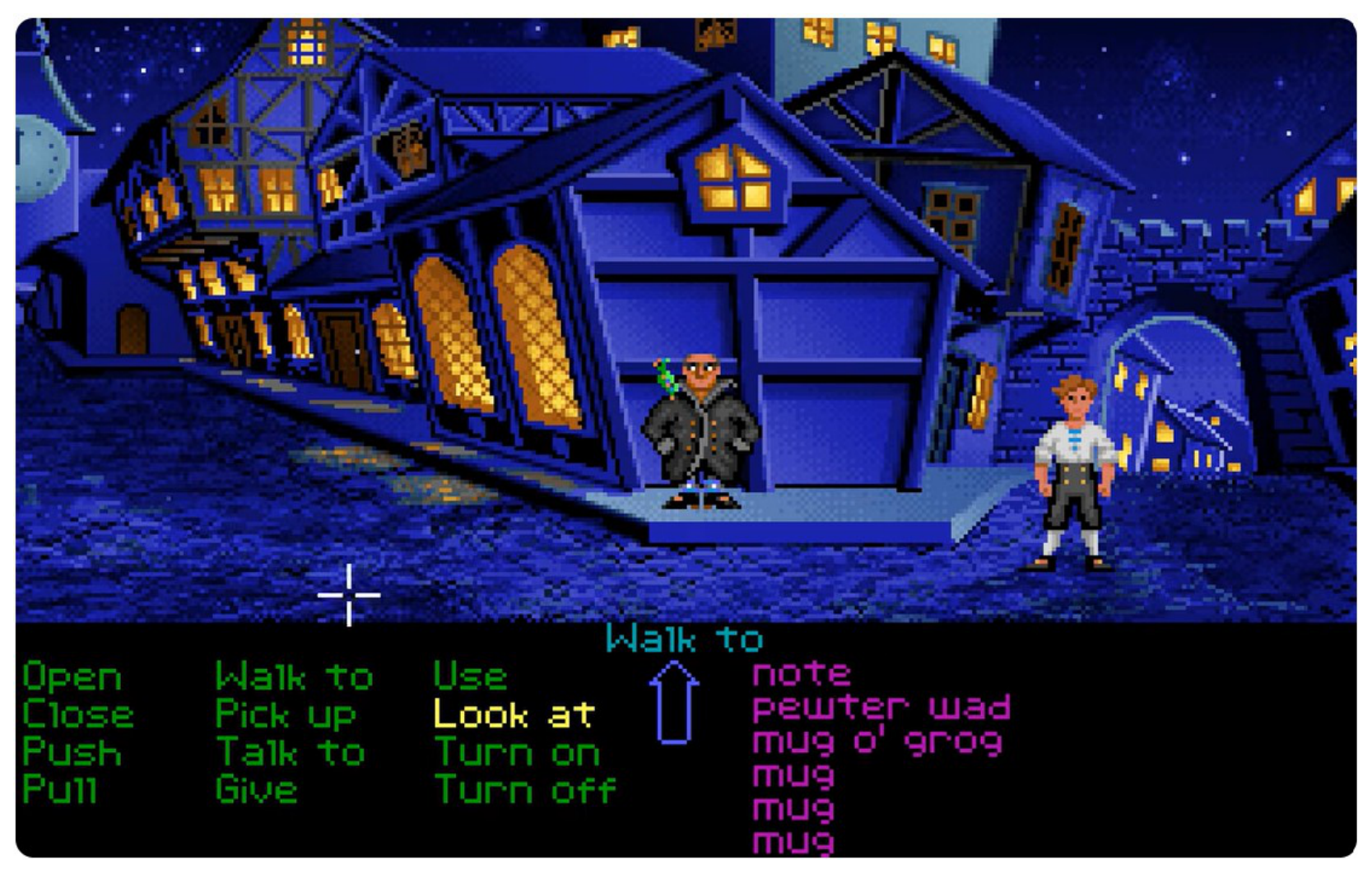
The mug resembles a traditional tavern tankard (Fig. 1): it has a dull grey metallic colour, a rounded shape, and no obvious ceramic glaze or wood grain.

Historically, such tankards were commonly made from pewter, a malleable alloy consisting predominantly of tin (The Pewter Society, n.d.). The game supports this identification: if the player waits long enough after filling the mug, it changes from a “melting mug” to a “pewter wad” (Fig. 2) before dissolving completely.
Pewter composition has varied over time, and historical alloys could contain lead. Modern pewter is generally tin-rich. Because the mug’s exact alloy composition is unknown, it is treated here as pure tin.
Thickness
The game provides no wall-thickness measurement. Historical pewter drinking vessels provide context for the choice of material (The Pewter Society, n.d.), but do not establish the thickness of the fictional mug. A thickness of 2 mm is therefore adopted as a ballpark value, rather than a measured property.
Expected composition and properties of grog
Here things get interesting. Table 1 lists the potential components of grog, their chemical composition (where available), and their possible contributions to tin corrosion. These provide a starting point for considering corrosion mechanisms. Not all components are necessarily present, however: the pirate leaders specify “one or more of the following”.
Table 1. Components of grog, chemical composition, and potential corrosivity towards tin.
| Component | Chemical composition / formula | Potential corrosivity towards tin |
| Kerosene | Mixture of hydrocarbons | Unlikely to attack tin directly; a hydrocarbon layer could impede contact with the acid. |
| Propylene glycol | 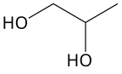 | Unlikely to attack tin directly; increased viscosity could slow mass transport. |
| Artificial sweeteners | Not specified | No clear direct acid-corrosion role; effects depend on the sweetener. |
| Sulfuric acid | H2SO4 | Potential proton-driven corrosion; concentrated acid may also act as an oxidant. |
| Rum | Typically about 40% ethanol by volume in water, with minor organic constituents. | Weak organic acids may contribute; the water dilutes sulfuric acid and changes its oxidising behaviour. |
| Acetone |  | No clear direct proton-driven corrosion role. |
| Red dye No. 2 (identified as amaranth) | 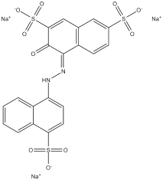 | No clear direct proton-driven corrosion role. |
| SCUMM | Unknown | Unknown; chemically undefined in the game. |
| Axle grease | Lubricating oil plus a thickener (often metal soaps) | Unlikely to attack tin directly; may impede acid–metal contact, as with kerosene. |
| Battery acid | Typically 30–40 wt.% H₂SO₄ in water | Potential acid corrosion; another source of sulfuric acid and water. |
| Pepperoni | Complex mixture of proteins, fats, water, NaCl, spices and fermentation products, including organic acids | Dissolved salts and organic acids may affect corrosion; the effect depends on solution and surface chemistry. |
Considering appreciable amounts of each of the listed ingredients, and neglecting potential effects of the mysterious SCUMM ingredient, grog might exhibit the characteristics summarised in Table 2. These predictions are composition-dependent. Interestingly, none of the listed ingredients seem to be able to provide an obvious explanation for the intense green colour seen in the game.
Table 2. Plausible characteristics of a mixture of the listed ingredients.
| Appearance | Initially reddish from the dye, with grease droplets and pepperoni particles possibly suspended. Strong acid could subsequently change the colour and degrade organic material, potentially producing a darker mixture. May produce fumes or bubbles, as the various components react with each other. |
| Homogeneity | Likely to separate into phases: an aqueous, acid-rich phase and an oily phase containing kerosene and grease. Kerosene is insoluble in water and less dense, so it would tend to float. Ethanol and acetone could improve mutual solubility, making the extent of separation composition-dependent. |
| Texture | Could range from a relatively mobile liquid to a greasy slurry, depending on relative amounts of the ingredients. Glycol and grease could thicken it, while acetone, ethanol and water would tend to dilute it. |
| Smell | A strong combination of petroleum, acetone and alcohol, with a hint of food-derived odours from the pepperoni. |
| Chemical stability | The organic components could undergo acid-catalysed reactions and degradation; the liquid’s composition would evolve. Concentrated sulfuric acid can react strongly with organic materials. |
| Flammability | Potentially flammable because of acetone, ethanol and kerosene. |
| Drinkability | Only fictional pirates could drink it. Completely unsuitable for human consumption. |
Analysing the composition, sulfuric acid stands out as the clearest candidate for proton-driven tin corrosion among the identified ingredients. No separate strong oxidant is explicitly listed. The model therefore initially treats grog as an aqueous acid solution. Concentrated sulfuric acid can also act as an oxidant, but water introduced with rum and battery acid would dilute it to an extent determined by the unknown mixing proportions, possibly negating the oxidation ability.
MODEL AND CALCULATIONS
Assumptions
Based on the assumptions established in Section 2, the problem is reduced to acid-only dissolution of an idealised tin tankard wall, with a thickness of 2 mm and a perforation time of 35 seconds. The schematic reaction is:
Sn+2H+→Sn2++H2 (1)Sn+2H^+→Sn^{2+}+H_2 (1)