Here's the Torcal, the first fully electric Bentley
A few weeks ago, Bentley gave Ars a ride in a new camouflaged electric vehicle. Named after a Spanish rock formation, the Torcal is the brand’s first battery EV, and today the production car had its formal unveiling. That camo was effective: The real car is less bulbous and more blocky than its disguise would suggest. And it’s fair to say it brings some of the ideas of the EXP 15 concept to the road—even if that didn’t include that show car’s elegant, stretched proportions. It’s smaller than the Bentayga, and it should slot beneath that model in pricing (or the PHEV version of it, at least), though Bentley has yet to reveal exactly how much US buyers can expect to pay.
Underneath the bodywork are some relatively familiar underpinnings; Bentley shares technology with Porsche as both are part of the greater Volkswagen Group empire. The power output might not be as prodigious as the electric Porsche Cayenne but should be sufficient nonetheless. The standard car will offer peak outputs of 810 hp (604 kW) and 880 lb-ft (1,194 Nm), enough for a 3.3-second 0–60 mph time (0–100 km/h takes 3.4 seconds).
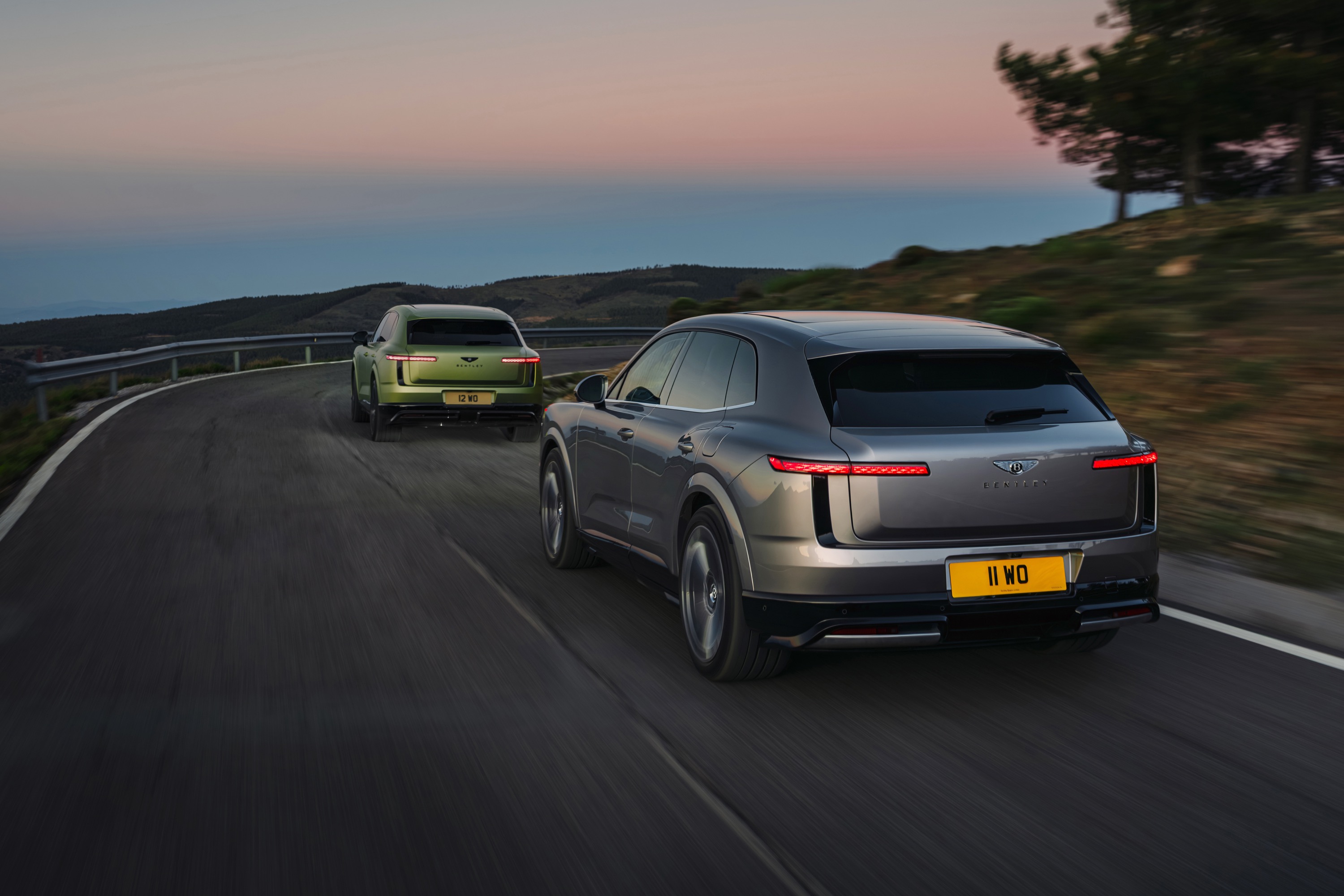 The EXP 15’s influence is stronger at the rear.
Credit:
Bentley
The EXP 15’s influence is stronger at the rear.
Credit:
Bentley
The more powerful Torcal S boasts 875 hp (653 kW) and 995 lb-ft (1,350 Nm) at its most potent; this is capable of 60 mph from a standing start in a mere 2.8 seconds (2.9 to 100 km/h) and an increased top speed of 162 mph (260 km/h), up from 155 mph (250 km/h) for the standard version, either of which are academic outside certain stretches of German highway.
Although it’s a much heavier car, the Torcal’s suspension and drive modes have been tuned to be familiar to existing customers, including things like pedal calibrations and steering response rates. And the clever active ride suspension means the Torcal isn’t just a one-trick wonder. “[In] a steady state environment… you’ve got the ride comfort and compliance from a Flying Spur, but in a dynamic environment, we’ve got a vehicle that’s as dynamic and capable as a GT,” said Martin Page, product line director for the Torcal.
From the back seat, it was indeed a comfortable experience, with the car leaning into corners rather than adopting more of a “skyhook” philosophy, like that other famous ultra luxury British automaker.
And as we learned during our ride, it sounds like a 6.75 L V8 on the move, at least unless you turn that setting off.
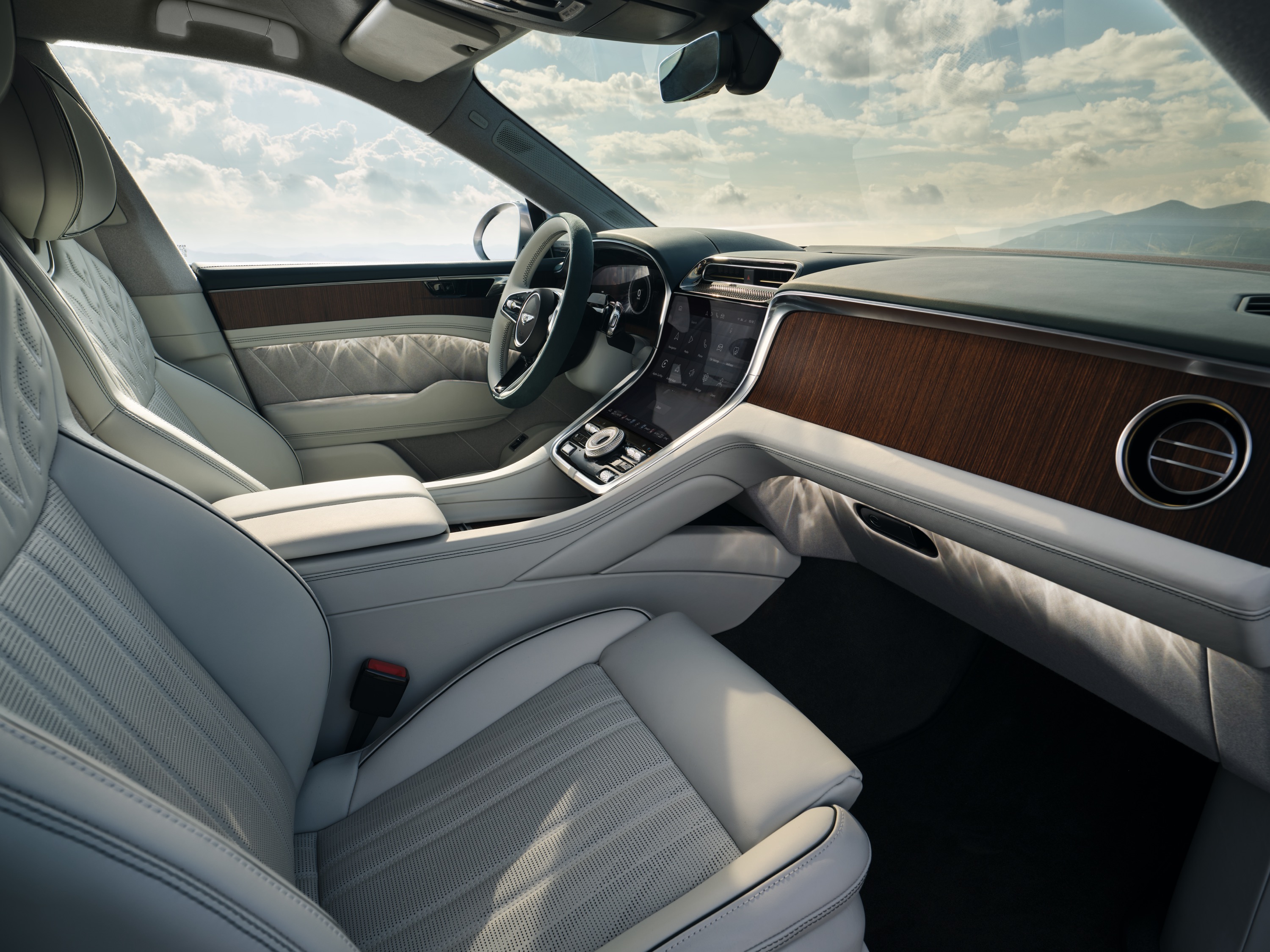 Ombre walnut is made from offcuts.
Ombre walnut is made from offcuts.
Ombre walnut is made from offcuts.
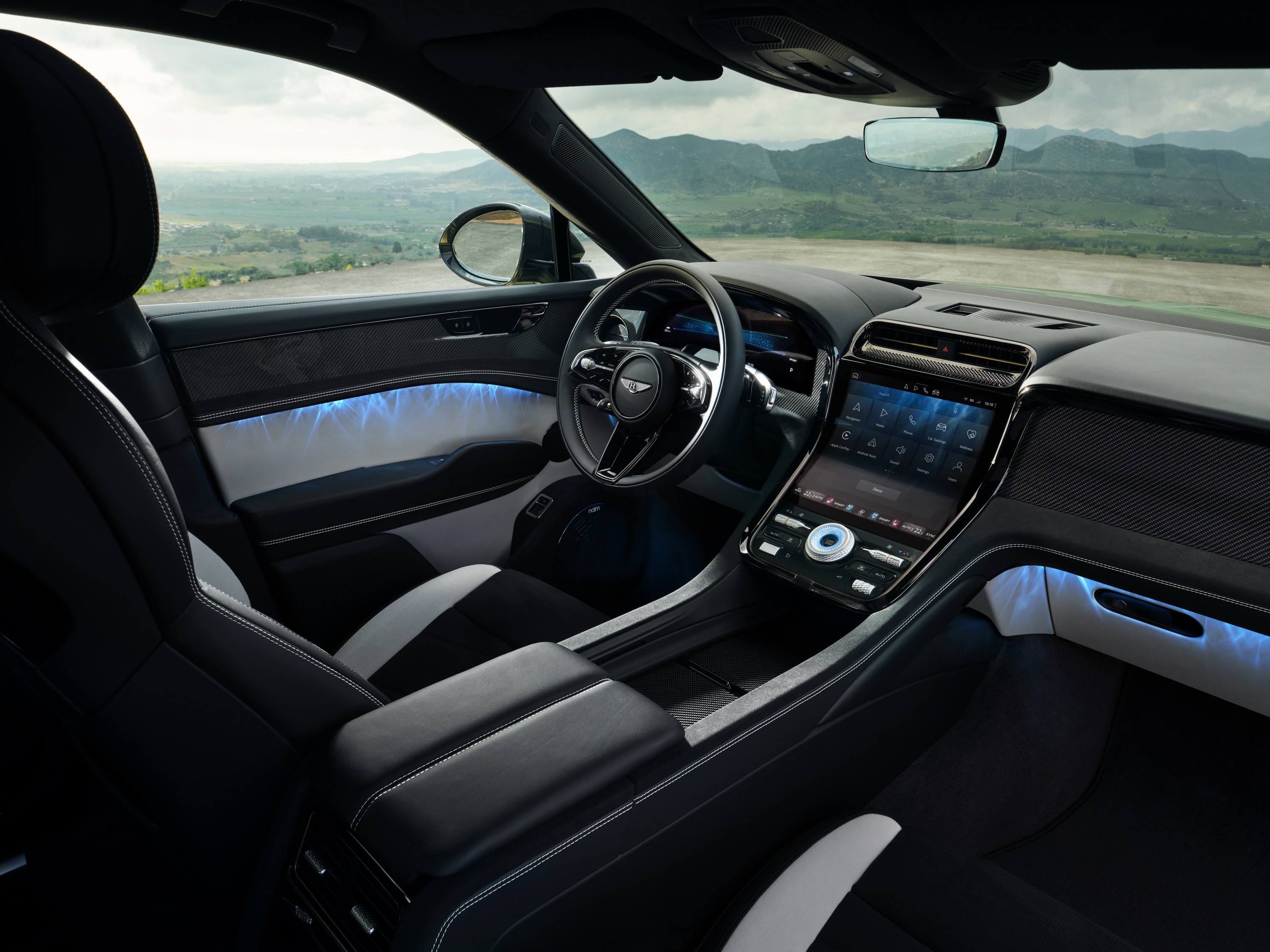 Bentley uses the same curved OLED infotainment screen as the electric Cayenne.
Bentley
Bentley uses the same curved OLED infotainment screen as the electric Cayenne.
Bentley
Bentley uses the same curved OLED infotainment screen as the electric Cayenne.
Bentley
Bentley uses the same curved OLED infotainment screen as the electric Cayenne.
Bentley
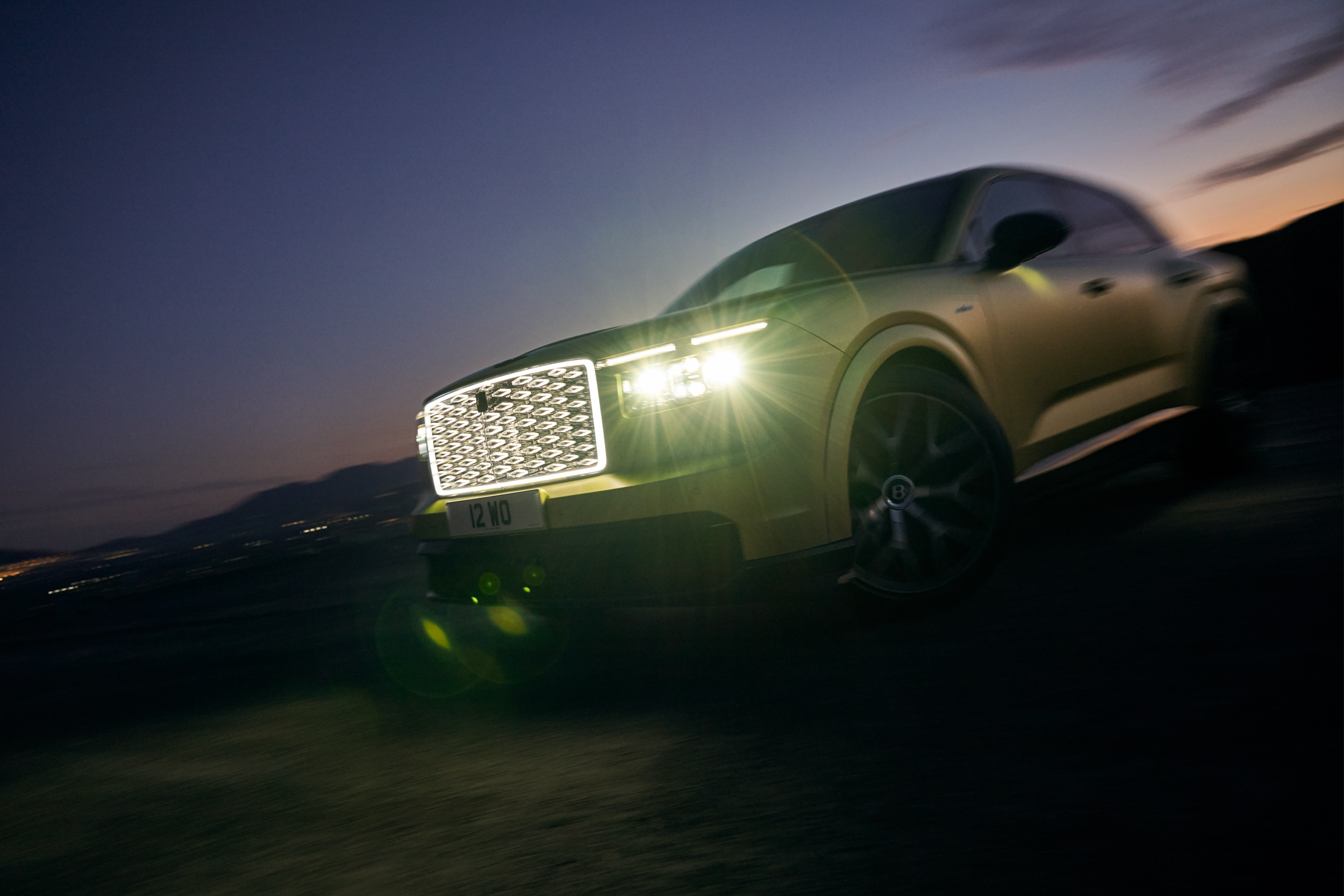 People will definitely see you coming at night.
Bentley
People will definitely see you coming at night.
Bentley
Bentley uses the same curved OLED infotainment screen as the electric Cayenne.
Bentley
People will definitely see you coming at night.
Bentley
People will definitely see you coming at night.
Bentley
People will definitely see you coming at night.
Bentley
Bentley uses the same curved OLED infotainment screen as the electric Cayenne.
Bentley
People will definitely see you coming at night.
Bentley
We can also see the full interior finally—during our ride, a few design elements were visible but were off-limits for discussion until today. Among the various materials that Bentley can use to trim the interior are a new merino wool fabric and a wood finish that’s made from up to 1,000 walnut offcuts glued together, then sliced up to use as a veneer. There’s no passenger infotainment screen, but there also aren’t any of the traditional metal “organ stoppers” that open or close their air vents. Instead, regrettably, the vents are aimed using the curved central touchscreen.
An official US EPA range estimate should be forthcoming closer to the time the Torcal goes on sale in the US early next year, but expect at least 300 miles. For now, Bentley says it’s rated at 375 miles (600 km) under the WLTP test. The 113 kWh (net) battery pack runs at 800 V and will DC fast charge at up to 400 kW, which should take just under 20 minutes to charge from 10–80 percent, Bentley says.
 Jonathan M. Gitlin
Automotive Editor
Jonathan M. Gitlin
Automotive Editor
Jonathan is the Automotive Editor at Ars Technica. He has a BSc and PhD in Pharmacology. In 2014 he decided to indulge his lifelong passion for the car by leaving the National Human Genome Research Institute and launching Ars Technica's automotive coverage. He lives in Washington, DC.
59 Comments
Jonathan M. Gitlin
Automotive Editor
Jonathan M. Gitlin
Automotive Editor
Jonathan is the Automotive Editor at Ars Technica. He has a BSc and PhD in Pharmacology. In 2014 he decided to indulge his lifelong passion for the car by leaving the National Human Genome Research Institute and launching Ars Technica's automotive coverage. He lives in Washington, DC.
59 Comments