Climate change talks fall apart in final hours over fossil fuels
Climate
Climate change talks fall apart in final hours over fossil fuels
By

,

,
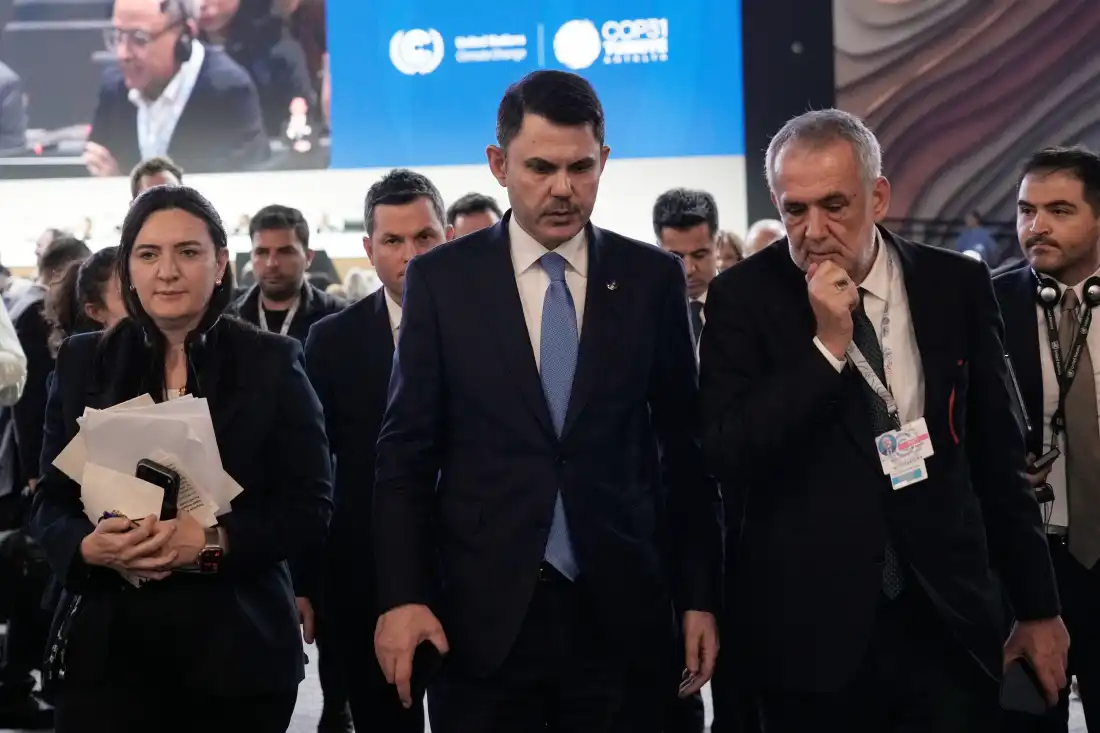
COP31 President Murat Kurum, center, leaves a closing plenary session at the U.N. Climate Summit, Sunday, Nov. 22, 2026, in Antalya, Turkey. Nearly 200 countries failed to reach an agreement on whether they should move away from fossil fuels like coal and natural gas.
Khalil Hamra/AP hide caption
Khalil Hamra/APANTALYA, Turkey – International climate talks in Antalya, Turkey, broke down in overtime hours with a disagreement over how to address fossil fuels, the main cause of global warming.
On Sunday, delegates from nearly 200 countries failed to reach an overall agreement covering targets for electrification, finance to help developing countries adapt to the impacts of climate change, and how to respond to the fact that the planet will soon breach a key warming threshold.
The talks ran two days longer than expected, becoming the longest climate conference in the history of these summits. And it ended in a dramatic fashion, with delegates from the European Union rejecting any final outcome that did not explicitly call for a transition away from fossil fuels. Some oil-producing countries like Saudi Arabia opposed such language. Burning fossil fuels like oil, gas and coal makes up roughly 73% of global emissions.
Ireland's Minister for Climate, Energy and the Environment Darragh O'Brien, who spoke for the EU, soon left the room, along with EU Commissioner for Climate, Net Zero and Clean Growth Wopke Hoekstra.
Other countries also objected to the text, including Panama, Belize, and small island states such as Vanuatu and the Marshall Islands.
Hoekstra said that with the world heading for an overshoot of 1.5 degrees, the EU could not tolerate an agreement that does not mention fossil fuels. "That is not acceptable," Hoekstra told reporters after walking out of the talks. "We do that with a heavy heart with many other countries, but we simply cannot accept this."
This is the first U.N. climate summit where there's been formal acknowledgment that the world will surpass a key global warming threshold. Countries agreed in 2015 to try to limit climate change to 1.5 degrees Celsius (2.7 degrees Fahrenheit), but the planet has essentially reached that limit already.
Passing that threshold means more severe climate impacts, like more intense hurricanes and heat waves. The United Nations found that a best-case scenario of 1.7 or 1.8 degrees Celsius would require cutting emissions immediately, reducing them by 45% by 2035. That, scientists say, would require dramatically cutting fossil fuel use.
Meanwhile, the transition away from fossil fuels is happening regardless of what the U.N. agreements say, says Chris Bowen, the Australian minister who ran the negotiations.
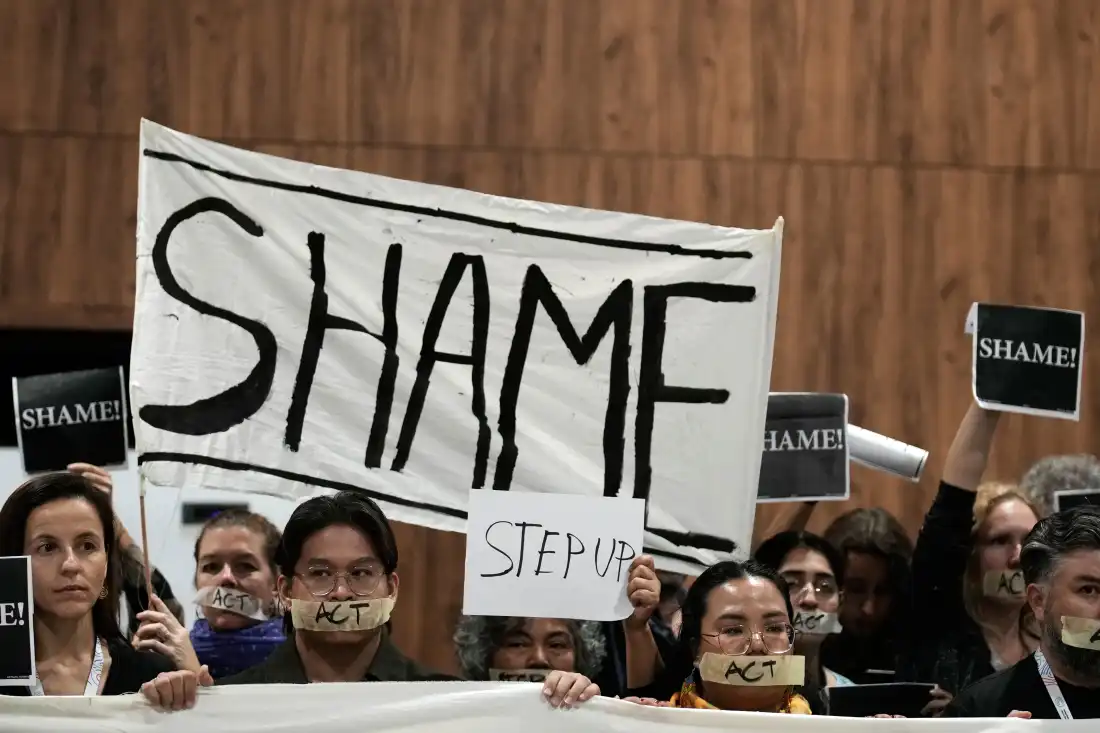
Negotiations at this year's U.N. Climate Summit were supposed to end Friday but there was no agreement on language about fossil fuels. Activists demonstrated by holding signs that read "shame" at COP31, Friday, Nov. 20, 2026, in Antalya, Turkey. Khalil Hamra/AP hide caption
Khalil Hamra/AP"The transition away from fossil fuels in the real world is inevitable," Bowen told the press after the agreement failed. "It's happening at speed and it's irreversible."
Climate
What influence does the U.S. have at this year's U.N. climate talks?
Disagreements on fossil fuels
The disagreements over mentioning fossil fuels in climate conferences have a long, fractured history.
The COP process works by consensus, so nearly 200 countries must agree to a final text at the end of the negotiations. Some fossil fuel producers like Norway and Mexico have recently wanted to include transitioning away from fossil fuels in the text. Other large oil-producing countries like Saudi Arabia and Russia have blocked adding fossil fuels to the final agreement.
At the climate talks in Dubai in 2023, countries agreed for the first time in 28 years of conferences to mention transitioning away from fossil fuels in the final agreement.
Deeply frustrated with this U.N. process, more than 50 countries have created their own separate conference dedicated to phasing out fossil fuels. In April, they held the "First International Conference for the Transition Away from Fossil Fuels" in Colombia. In 2027, Ireland and the Pacific Island nation of Tuvalu will co-host the second conference.

Climate
In the midst of an energy crisis, countries make plans to ditch oil, gas and coal
These side efforts are the best hope for climate action until something changes in the COP process, says Juan Carlos Navarro, environment minister of Panama.
"I am an optimist by nature," he tells NPR, "but I am not an idiot."

Short Wave
"A very, very big deal." Countries take on fossil fuels
Increasing electrification
This year, the ongoing U.S.-Israeli war with Iran and the unprecedented closure of the Strait of Hormuz loomed over the negotiations.
Since the war began, countries across Asia and Africa have accelerated their transitions to solar energy, batteries and electric vehicles, and reduced their reliance on fossil fuels like oil and natural gas.

Only on NPR
The Iran war has pushed some countries away from oil and toward clean energy
COP31 organizers promised that this would be the "electrification COP." Climate technologies like renewable energy, super-efficient heat pumps and electric vehicles are also called electrification technologies. Many of these technologies are being manufactured in China, the main exporter of climate solutions.
Climate
China and the U.S. are the world's biggest polluters. And the U.S. is falling behind
The conference's initial goal was to increase global electrification from its current level of around 23% to 35% by 2035. "So 35 by '35 is the mantra," Kingsmill Bond, an analyst at the energy think tank Ember, told NPR when COP31 began.
The 35 by 35 electrification pledge was signed on to by dozens of countries. However, that pledge did not ultimately pass, says Alden Meyer, a senior associate at the climate change think tank E3G. "Electrification was collateral damage when the whole decision cratered," he said.
Lack of U.S. Presence
The Trump administration did not send a delegation to COP31 for a second year in a row. President Trump announced he would withdraw the U.S. from the Paris Agreement on his first day back in office in 2025. Trump has called climate change a hoax, and his administration has rolled back regulations on climate pollution and funding for wind and solar power and electric vehicles.
An informal delegation of congressional Democrats did come to Turkey. They told delegates at COP31 that when Democrats control both chambers of Congress next year, climate change will return to the main agenda.
Billions of dollars still needed
While the debate over fossil fuels stole the spotlight at this year's COP, a major focus of the negotiations has been on money. Countries debated new goals for funding to assist nations hardest hit by climate change.
Over the years at climate summits, lower-income countries have made the case that while they're responsible for only a small share of the emissions causing climate change, they're experiencing some of the worst disasters.
"We're not a nation that has the luxury of debating whether climate change is real for us," says Matthew Samuda, Jamaica's minister of water, environment and climate change. "The reality is, over the last five years, we have had a category 4 hurricane, a tropical storm and a category 5 hurricane. So climate change for us is indeed real and we are experiencing economic losses from a problem that we didn't create."
In 2024, nations agreed to eventually provide $1.3 trillion per year to developing nations, what's known as climate finance. Only about $136.7 billion was delivered in 2024, according to a report from the Organization for Economic Co-operation and Development. The majority of that goes to projects that reduce emissions, including renewable energy like solar and wind.
As climate disasters become costlier, lower-income countries have been pushing for more funding to adapt to climate impacts, such as protecting coastal communities from sea level rise and strengthening infrastructure against storms. The United Nations estimates that those nations' needs will reach $305 billion annually by 2035.

The COP31 U.N. Climate Summit ended Sunday in Antalya, Turkey and tens of thousands of people attended what has become the longest summit in the history of these gatherings. Khalil Hamra/AP hide caption
Khalil Hamra/APDuring the talks in Turkey, developing nations pushed for more concrete commitments to deliver adaptation funding. But those elements to deliver on tripling adaptation funding by 2035 were in the larger decision that was ultimately rejected, Meyer says.
"Vulnerable countries from Africa and elsewhere are quite angry about that outcome," he says.
Earlier this year, countries requested $2.8 billion to help with damages, but only $342 million in funding was available.
At the COP31 summit, only $142 million in additional funding was pledged, far less than in other recent COP summits.
NPR correspondent Michael Copley contributed to this story. This story was edited by Sadie Babits.
Correction Nov. 22, 2026
A previous version of this story incorrectly said the European Union walked out along with other countries. In fact, EU representatives walked out while other countries objected.
NPR does not offer or accept money for coverage or interviews.
Anyone who makes such an offer or request is not an NPR employee and does not represent NPR.